Hanke met with Turkish Transport Minister Uraloğlu Focus on the Middle Corridor as a growing logistics route and a new air transport agreement
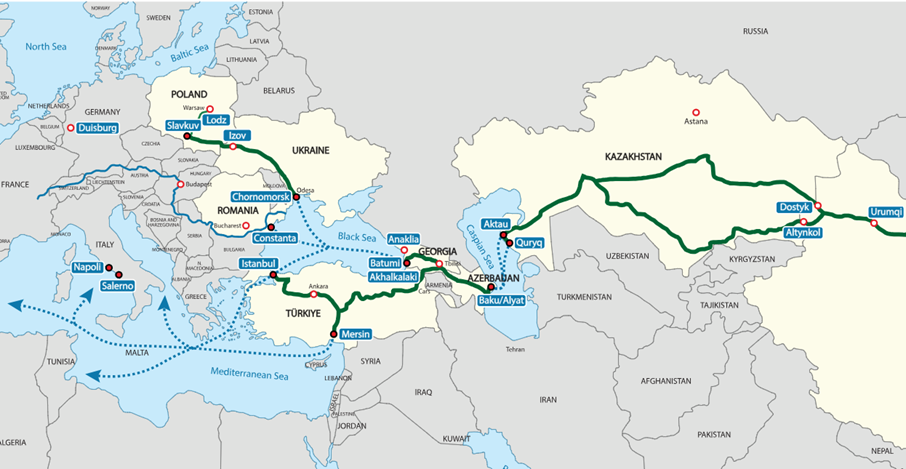
Russia’s war of aggression against Ukraine has brought about lasting changes to trans-European supply and transport chains. As a result, the so-called Middle Corridor – the Trans-Caspian International Transport Route – has evolved from a supplementary trade route into a strategically important transport axis between Europe and Asia. The volume of goods transported via the Middle Corridor has increased eightfold since the start of the war. As an alternative to the northern route via Russia, the corridor is becoming increasingly important for Europe’s economic resilience, the diversification of supply chains and security of supply. At the same time, it opens up new connections to the dynamically growing markets of Central Asia.
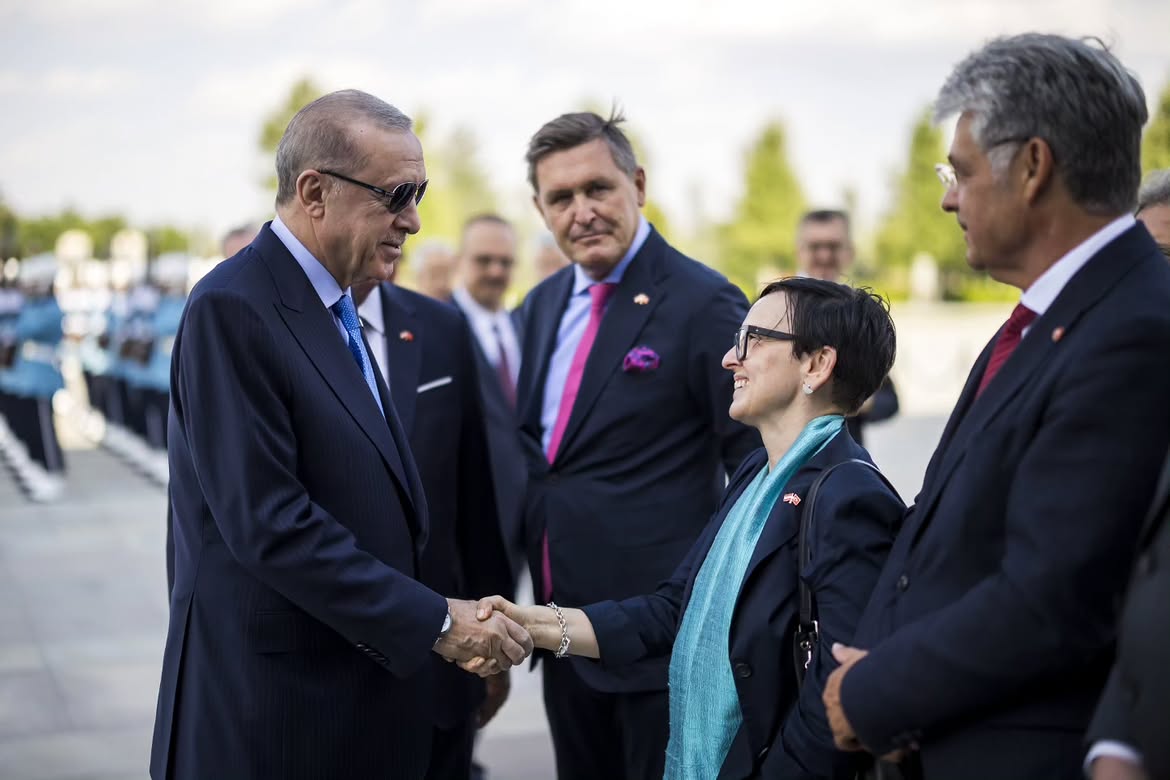
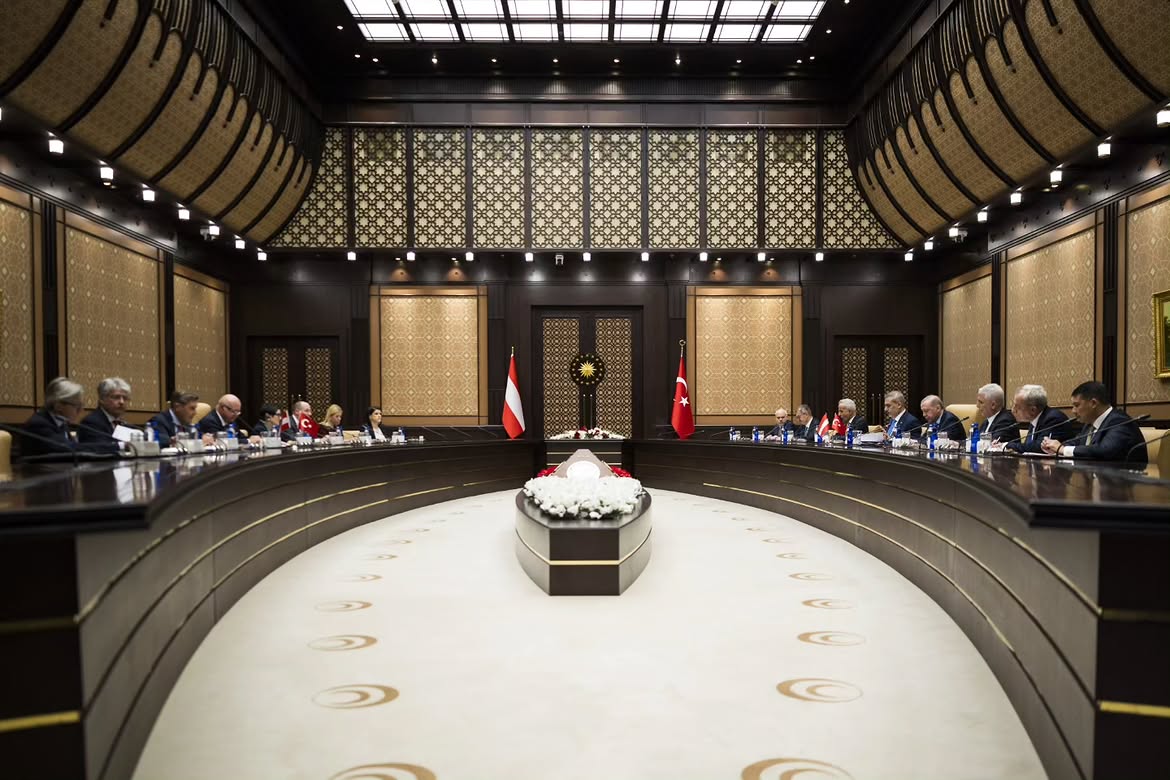
gainst this backdrop, Federal Minister Peter Hanke met with the Turkish Minister of Transport and Infrastructure, Abdulkadir Uraloğlu, as part of his state visit to Turkey. The talks focused on the further development of the Middle Corridor, the expansion of cross-border transport infrastructure and the deepening of bilateral cooperation in rail and freight transport.
“It is precisely in times of geopolitical challenges that we need reliable and resilient transport links. The Middle Corridor strengthens Europe’s security of supply, opens up new economic prospects and connects regions that will cooperate even more closely in future. As an efficient transport hub at the heart of Europe, Austria is actively contributing to this development. Together with Turkey, we want to drive forward the expansion of modern and efficient transport routes,” emphasised Transport Minister Peter Hanke following the meeting.
Turkey is a key link to Asia via the Middle Corridor
Turkey plays a key role in the Middle Corridor. As a crossroads between Europe and Asia, it has efficient rail, road and port infrastructure and forms the corridor’s most important access point to the European transport network. Austria and Turkey have also enjoyed close cooperation in rail freight transport for many years, particularly between the ÖBB Rail Cargo Group and the Turkish State Railways (TCDD). This cooperation forms an essential basis for efficiently channelling the flow of goods from Asia to Europe.
During discussions with Minister Uraloğlu, it became clear that the potential of the Middle Corridor is closely linked to the further expansion of infrastructure along the entire route. At present, there are still significant capacity and efficiency bottlenecks, particularly in rail links, the ports on the Caspian Sea, and customs and border procedures. Turkey therefore emphasised the importance of coordinated investment, whilst Mr Hanke highlighted the importance of digitising logistics processes and close international cooperation along the entire route.
Austria is following these developments with great interest. As an export-oriented economy and a transport hub at the heart of Europe, Austria benefits from efficient international transport links. With its well-developed rail corridors towards South-Eastern and Eastern Europe, as well as its central location within the trans-European transport networks, Austria is ideally placed to absorb additional freight flows from the Middle Corridor and to process them further within Europe.
Operational developments also confirm the corridor’s growing importance. Whilst the ÖBB Rail Cargo Group handled just one block train via the Central Corridor in 2024, the transport volume had already risen to 32 block trains by 2025. A further increase of around 20 per cent is expected for 2026. At the same time, there remains considerable potential for expansion: the Central Corridor currently has only around ten per cent of the capacity of the traditional Northern Corridor and still faces infrastructural challenges.
Minister Hanke and Minister Uraloğlu agreed that modern transport infrastructure extends far beyond economic considerations. Efficient international transport corridors strengthen the stability of global supply chains, promote sustainable rail freight transport and make an important contribution to Europe’s economic resilience. Both ministers therefore reaffirmed their commitment to further deepening cooperation between Austria and Turkey in the transport sector and to continuing regular political dialogue on joint infrastructure and logistics projects.
Austria intends to conclude a new air transport agreement with Turkey
Bilateral cooperation is also set to be further strengthened in the aviation sector. Negotiations on a new aviation agreement have been underway since last year and are now nearing completion. It establishes a modern legal framework for air travel between the two countries that complies with EU law, and is thus intended to provide long-term legal certainty for airlines as well as additional opportunities for tourism and the economy. The need for action is also clear given the current significant disparity in market shares: in the 2026 summer timetable, Turkish airlines will be offering more than 200 weekly flights between Austria and Turkey, whilst Austrian Airlines will be operating just six weekly services.
“Our relations with Turkey are close and multifaceted – and this also applies to air transport. With the new air transport agreement, we are creating the necessary legal certainty and paving the way for more opportunities for businesses, tourism and travellers. The priority now is to swiftly resolve the outstanding issues regarding capacity so that both sides can benefit from a modern and balanced air transport framework,” emphasised Hanke.
The new agreement is therefore intended not only to ensure compliance with EU law, but also to lay the foundations for a fair and competitive aviation market. From Austria’s perspective, an important next step is the prompt signing of the accompanying Memorandum of Understanding, in particular the establishment of appropriate capacity levels for both sides.
Middle Corridor
- A 6,180-kilometre multimodal transport axis between China and Europe.
- Seven countries and stakeholders are linked by the corridor: China, Kazakhstan, Azerbaijan, Georgia, Turkey and Europe.
- 4.1 million tonnes of freight were transported via the corridor through Aktau and Kuryk in 2024 (+63 per cent compared with 2023)
- This represents an eightfold increase since the start of the war (2021: 500,000 tonnes of freight)
- An annual transport volume of 11 million tonnes is forecast by 2030.
- The journey time between China and Europe is around 3 weeks; traditional routes take 5–6 weeks.
- Currently, only 10 per cent of the Northern Corridor’s capacity is available.
- The ÖBB Rail Cargo Group transported 32 block trains via the Middle Corridor in 2025 (2024: 1).
- The ÖBB Rail Cargo Group expects 20 per cent growth in its transport volumes via the corridor in 2026.
- The European Union plans to invest 10 billion euros in transport projects in Central Asia through the Global Gateway Initiative.