Urban Innovation in Focus: Federal-Pioneer City Dialogue on the Future of Austrian Cities High-Level Exchange between Federal Government and Pioneer Cities in Vienna
Cities and municipalities play a key role on the path to climate neutrality: approximately 80 percent of the world's energy consumption occurs in urban areas, where around three-quarters of global CO₂ emissions originate. The mission "Climate Neutral City" is supported by the Ministry of Innovation (BMIMI) and the Climate and Energy Fund to help Austrian cities actively shape their future.
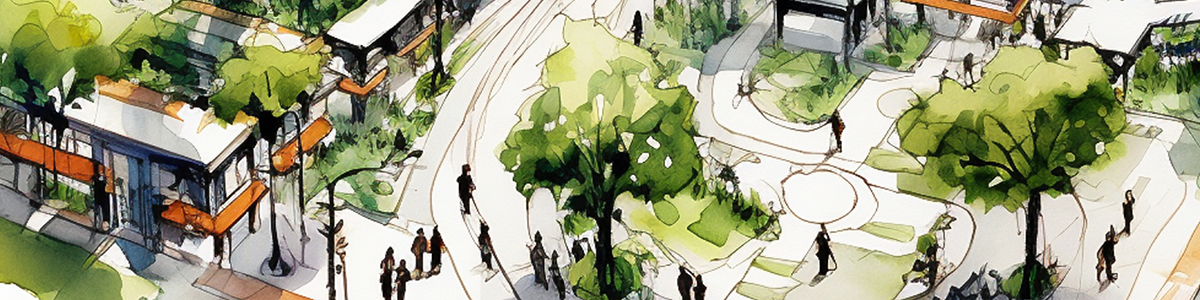
The initiative promotes technical, socio-ecological, and economic innovations that significantly advance cities in the transformation process towards climate neutrality and adaptation to climate change. The ten Austrian pioneer cities are at the heart of this development: they represent the interests and needs of more than a third of the Austrian population and develop solutions from which all cities and municipalities can benefit in the long term.
During yesterday's Federal-Pioneer City Dialogue, political representatives from the ten Austrian pioneer cities met with Section Chief Henriette Spyra, Ministry of Innovation, Mobility and Infrastructure (BMIMI). The aim of the meeting was a high-level exchange between the federal government and cities about key framework conditions, specific challenges, and action-oriented solutions for the sustainable development of Austrian cities. Topics such as climate-neutral energy supply and mobility, regional value creation, supply security, and measures to adapt to climate change were at the forefront, ensuring long-term quality of life in cities while strengthening Austria's economic location. A key element of the meeting was also the exchange between the cities themselves: the pioneer cities shared experiences from their projects, learned from each other, and developed solutions together that can benefit other municipalities.
Innovation Minister Peter Hanke: “Our cities are essential partners on the path to climate neutrality. The current crises once again highlight the importance of a secure and independent energy supply. The pioneer cities are pioneering: they rely on renewable energy, strengthen regional value creation, and make their cities more resilient to global developments. Therefore, the exchange is important to me. The Federal-Pioneer City Dialogue provides space for direct conversations at eye level: between the federal government and cities, but also among the cities themselves. Many solutions arise where cities learn from each other and together take new paths.”
Section Chief Henriette Spyra: “Yesterday's discussions impressively demonstrated how intensively Austria's pioneer cities are working towards their goal of becoming climate neutral. This proves once again that the transformation process is in full swing and actively shaped by the cities. In Austria, innovation strength and implementation capability go hand in hand. Quality of life, affordable energy, and clean mobility are at the top of the cities' agenda. The exchange within the framework of the Mission Climate Neutral City is particularly valuable to learn from each other, exchange on challenges at eye level, and move forward together with courage.”
Pioneer cities set new standards
The ten Austrian cities Vienna, Graz, Innsbruck, Linz, Salzburg, Klagenfurt, Villach, St. Pölten, Dornbirn, and Wiener Neustadt have formed a partnership with the BMIMI. As pioneer cities, they consistently align their administrative structures towards climate neutrality, build capacities for implementation, develop climate-fit urban quarters, and create learning environments that other municipalities can benefit from. The innovative implementation measures in the pioneer cities set new standards, thereby increasing local innovation strength, driving technological development forward, and securing the long-term competitiveness of Austria as an economic location. At the same time, they reduce their dependence on imports of fossil energy, goods, and raw materials, create jobs in future-oriented sectors, and increase domestic value creation. In doing so, they ensure prosperity and investment domestically - today and for future generations. The federal government's research and development programmes already play a central role.
Federal-Pioneer City Dialogue: Strengthen Cooperation – Promote Exchange
In this context, the Federal-Pioneer City Dialogue serves as an effective instrument for the strategic further development of urban innovation at the highest decision-making level. The exclusive high-level format offers mayors, deputy mayors, and city councillors of the pioneer cities the opportunity for direct exchange with Section Chief Henriette Spyra, Bernd Vogl, Managing Director of the Climate and Energy Fund, as well as responsible specialists. The focus is on the partnership cooperation and the specific needs and concerns of the cities on the path to achieving the pioneer city goals. In addition to personal exchange, a position paper developed at the expert level by the cities is handed over to the federal government, summarizing central concerns.
Bernd Vogl, Managing Director of the Climate and Energy Fund: “The pioneer cities demonstrate how the switch to renewable energy sources and adaptation to climate change can work in practice. They test new solutions, build knowledge, and create models that other cities can use. This exchange – between cities, with the federal government, and with experts – makes the mission so effective. Solutions are created that benefit both the climate and the regional economy and people's quality of life.”
Voices from the Pioneer Cities
St. Pölten
Through the pioneer city process, St. Pölten has established its own business unit for climate agendas. One of the core aspects of its work is the citizen energy community (CEC) EnergieRegion St. Pölten, which now covers the entire city area and also enables citizens from the region to actively participate. In addition to photovoltaic electricity, wind and hydropower can be sourced via the CEC to close nighttime and winter gaps in energy supply.
“The pioneer city process has set important steps to accelerate the energy transition. Not only the energy community, but also the new municipal PV open space plant with battery storage make valuable contributions to reduce CO₂ emissions in the city and strengthen energy security,” emphasizes Mayor Matthias Stadler.
Dornbirn
The city of Dornbirn works as a pioneer city for the Climate Neutral City Mission intensively on concrete solutions for climate-fit urban development. Key areas include circular economy and the gradual conversion of municipal mobility systems to emission-free drives – for example, with the city bus or municipal service vehicles. The goal is to connect climate protection measures with a high quality of life for the population and, at the same time, develop practical models for other cities.
Graz
The financing partnership allows the city of Graz to deploy eight additional staff members in the administration for five years to specifically enhance climate work. This drives the Graz Climate Protection Plan towards the goal of achieving climate neutrality by 2040. Projects such as the Climate Pact #bindabei, the Climate Light, and the preparation of climate-neutral quarters have been initiated or expanded as a result. Additionally, the close exchange with the federal government strengthens transformation and facilitates access to subsidies.
“The path to a climate-neutral city is a joint task. The partnership with the federal government helps us in Graz to implement projects faster and to bring additional funds for climate protection into our city,” says Deputy Mayor Judith Schwentner.
Wiener Neustadt
Being classified as a pioneer city was and remains an important step for Wiener Neustadt to consistently integrate climate protection and climate change adaptation into urban development. Significant milestones have already been reached: the entire thematic complex has been structurally anchored in the Unit for Urban Development, Transport, Environment, Climate, and Energy. At the same time, the expansion of photovoltaic systems on rooftops and open spaces is being consistently promoted, for example at Aqua Nova or on the ballast depot. Additionally, vacant land has been identified, which will be developed into climate-neutral urban quarters together with developers.
Linz
The pioneer city initiative strengthens cooperation in Linz between the Magistrate, GWG, and LINZ AG on the path to a climate-neutral city. With the establishment of a citywide greenhouse gas monitoring system and the first report in 2025, a central foundation has been created. At the same time, climate-neutral construction and renovation standards in residential construction are being developed, and in the Franckviertel, energy supply is gradually being switched from gas to district heating or electricity.
“We are taking specific measures in Linz for a climate-neutral future and consistently driving implementation forward,” emphasizes Mayor Dietmar Prammer.
Klagenfurt
The state capital Klagenfurt am Wörthersee pursues with its Smart City Climate Strategy and participation in the EU-Cities Mission the goal of achieving accounting climate neutrality by 2030 and complete climate neutrality by 2040. Ambitious projects are being implemented, and the population is actively involved. Particularly with the newly established Smart Climate Lab, the citizen's office for sustainability issues, participation and involvement in climate protection and climate adaptation are promoted.
Deputy Mayor Patrick Jonke: “We are particularly proud of the activities in our local climate protection network in the Smart Climate Lab. We have already concluded climate protection agreements with over 40 companies. A clear commitment to a livable and sustainable business location in Klagenfurt.”
Vienna
„With the Vienna Climate Act 2025, the City of Vienna is making a clear statement and taking on an important pioneering role on the path to climate neutrality. The focus is on those areas where the city can act directly, and measures show immediate impact. Vienna approaches it holistically and uses synergies in climate-relevant tools to create the necessary transformation towards a climate-neutral, climate-resilient and resource-conserving future,“ says Climate Councillor Jürgen Czernohorszky.
Together with the other pioneering cities, many important measures such as urban greenhouse gas accounting, climate-neutral administration, withdrawal from oil and gas, or integrated transformation of existing quarters are being examined and further developed.
Salzburg
„The city of Salzburg is consistently advancing the implementation of its climate roadmap 2040 within the framework of the pioneer city initiative and setting a strong signal for the future,” confirms Councillor Anna Schiester.
The focus is on climate-neutral quarters, the expansion of renewable energies and sustainable mobility in the sense of SUMP. In parallel, the development of a circular economy strategy is gaining momentum. To achieve the goal, Salzburg relies on modern administrative structures and a sound greenhouse gas accounting. The monitoring tool ClimateView makes progress visible and enables targeted control. The city also takes responsibility at the European level. As a Twin City, Salzburg strengthens international exchange and actively shapes the path to climate neutrality.
Innsbruck
Mayor Johannes Anzengruber is convinced: „The pioneer city team supports the municipal departments with targeted expertise. Especially where specific know-how or coordination is lacking. So we are driving important projects forward for Innsbruck: such as the climate roadmap, a citywide energy monitoring, and sustainable procurement (naBe). The goal is to save energy and reduce costs.”
Villach
As a climate pioneer city, Villach pursues a central goal: highest quality of life and location for the city.
„Climate protection is not an end in itself for us but increases health, affordability, and future opportunities,” says First Deputy Mayor Sarah Katholnig.
Villach relies on projects that simultaneously fulfill several goals and are created in cooperation with partners, such as climate-fit quarters, the Green Axis, and the agri-photovoltaic installation. Planning and implementation are carried out using modern municipal methods, which are shared and effectively, bindingly, and collaboratively further developed within the framework of the partnership with the federal government and other cities.