Innovation Minister Hanke opens AI Factory Austria Coworking Hub in SOLARIS as training campus for AI technologies and their applications
Last year, the AI Factory Austria AI:AT launched with a clear goal: to provide structured access for Austrian companies to European high-performance computing, to strengthen digital sovereignty, and to bring artificial intelligence from strategy to application.
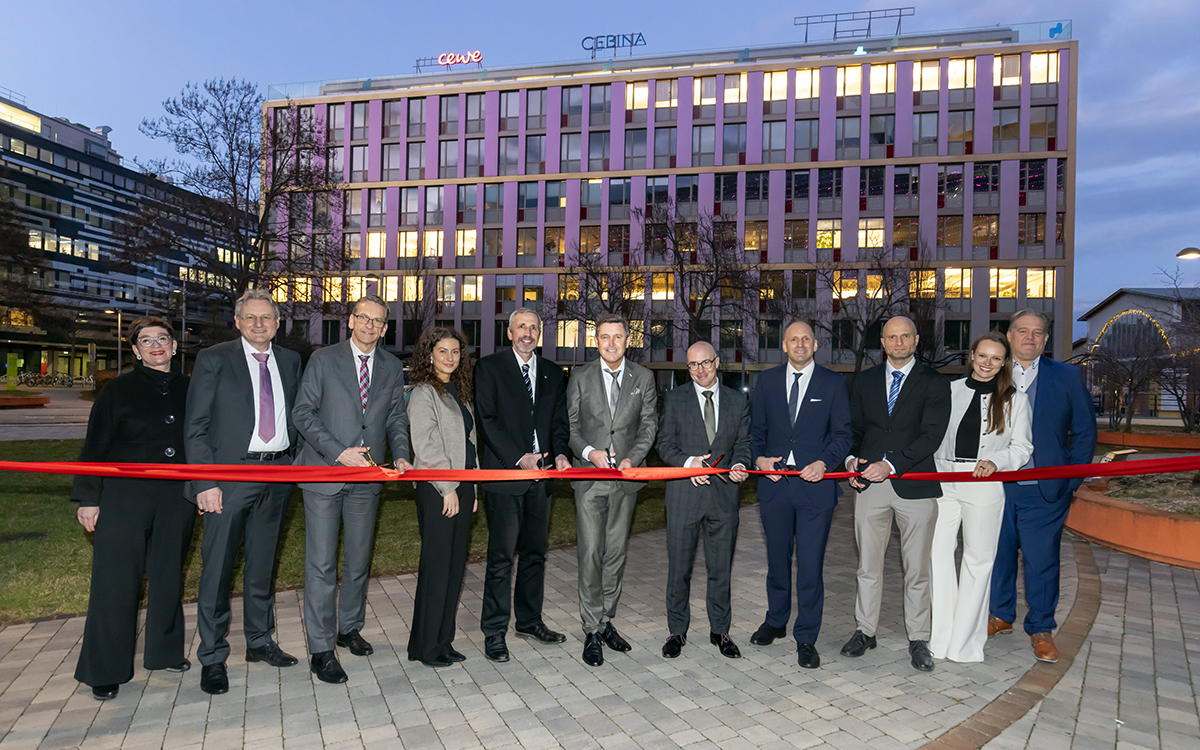
With the Coworking Hub in SOLARIS in Karl-Farkas-Gasse in Vienna -Landstraße, which was officially opened yesterday evening by Innovation and Infrastructure Minister Peter Hanke, AI:AT sets the next milestone.
“Artificial intelligence (AI) is fundamentally changing our society and economy. That is why we have defined it as one of nine key technologies and areas of strength in the Industrial Strategy 2035. In my ministry's key technology initiative and in the newly agreed STI Pact 2027-2029, AI also plays an important role. Overall, my department provides 1.7 billion Euro for the support of applied research, more than any other department. To make the most of the potential of AI, it is important both to provide the skills to master this technology and to provide the infrastructure for its use. The AI Factory enables both” explained Hanke.
AI Factory combines infrastructure with knowledge transfer
AI:AT is a fundamental component of the AI ecosystem at Austria's innovation hub, providing domestic research institutions and companies, including many SMEs and start-ups, with access to AI hardware and skills, both of which are central to Austria's economic and innovation landscape.
Until the Vienna supercomputer is expected to go live at the end of 2027, access to European high-performance computing (HPC) is provided via the Leonardo supercomputer located in Bologna, Italy. With a computing power of over 250 million billion calculations per second, Leonardo is among the most powerful computers in the world.
Coworking Hub as training room
The newly opened Coworking Hub is more than just a shared space, serving as a physical centre and central contact point for the exchange among companies, research institutions, and public administration as well as a training ground for practical applications of AI.
AI:AT is designed as a one-stop-shop that supports organisations along the AI journey, starting from product development to practical implementation. It focuses on imparting skills through workshops and training offers.
“It is the interface through which companies and research in Austria can reliably access European infrastructure and develop, train, and validate AI applications in a trustworthy, secure, and competitive manner. Furthermore, the AI Factory helps to increase the international visibility of Austrian skills,” concluded Hanke.