Transport Minister Schnieder and Hanke gathered for mobility dialogue in Vienna Germany and Austria strengthen cooperation in transport matters – exchange over current infrastructure projects and optimised construction site management
The Transport Ministers of Germany and Austria, Patrick Schnieder and Peter Hanke, discussed current transport policy issues and upcoming infrastructure projects in Vienna today. Alongside the political representatives, the heads of the German and Austrian railway and road operators participated – a novelty in recent history.
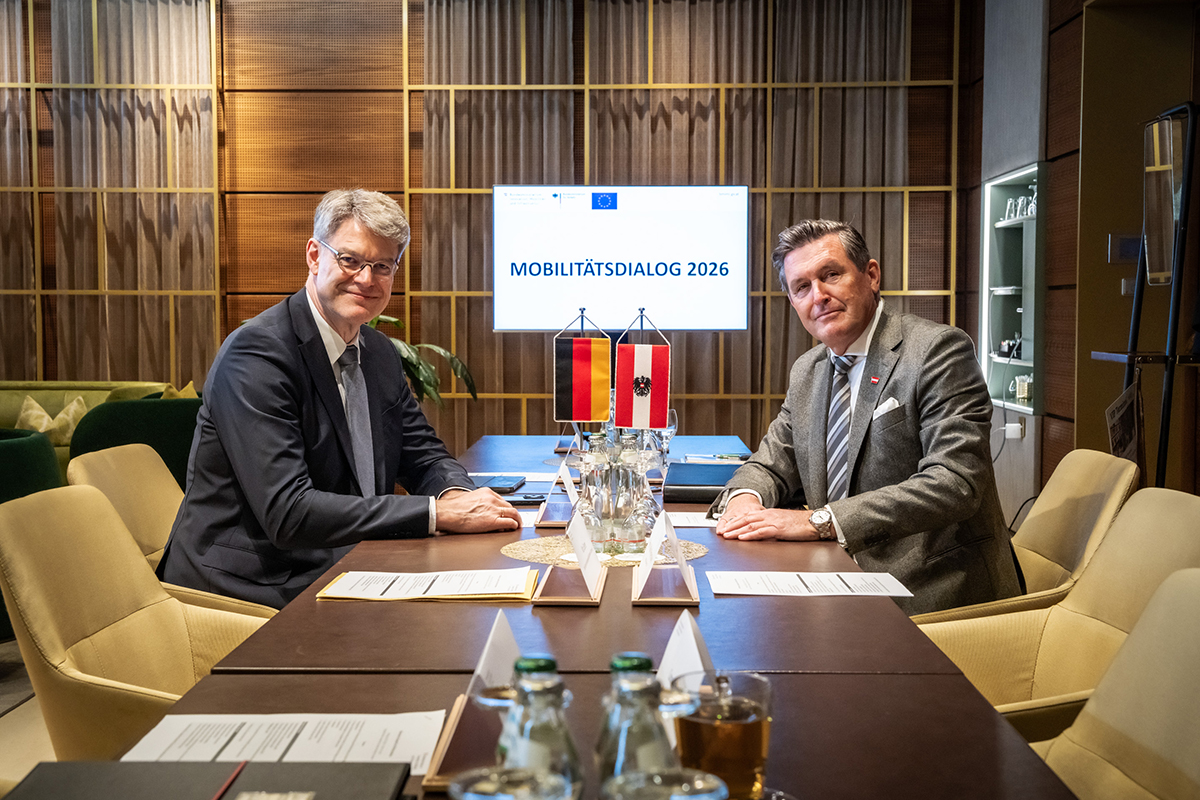
This exchange also addressed better coordination of construction sites on roads and railways in the Central European area, challenges in freight transport, as well as the approval of railway vehicles from third countries in the European Union.
Cross-border infrastructure key for future-proof mobility & strong economic area
Both ministers placed significant importance on effective cross-border construction site coordination by infrastructure operators, which, together with Switzerland, should encompass all road and railway operators in the DACH region. The goal of such an initiative is to better synchronise infrastructure work across national borders and transport carriers in the future, thereby reducing the impact of construction work on the economy, freight transport, and travellers. The Alpine region is set to experience extensive refurbishment and renewal measures in the coming years, affecting both rail and road networks, which will significantly limit available transport capacities.
Transport Minister Schnieder: 'An efficient infrastructure is as vital for citizens as it is for our export-oriented economy. Therefore, it is important for me that construction and refurbishment measures are coordinated early and across borders between infrastructure operators on road and rail. I therefore welcome Austria's initiative based on the ongoing professional discussions between Germany, Austria, and Switzerland.'
Transport Minister Hanke following the meeting: 'Cross-border mobility only works if we jointly think and manage the various transport carriers. Our concern is to better coordinate construction sites on roads and railways and reduce burdens for the economy, commuters, and travellers. I thank Mr Schnieder for the excellent exchange at our mobility summit in Vienna and see this as a starting point for constructive cooperation, from which the entire DACH area and beyond will benefit.'
Current construction projects in the border area highlight the need for action. Maintenance work by the German Railway between Freilassing and Rosenheim at the beginning of 2026, longer-term restrictions on the West Route, and the impact of corridor renovations in Germany on the traffic of the Austrian Federal Railways show how closely intertwined the networks are.
Minister Hanke further noted that Austria has already successfully established domestic coordination models between infrastructure operators, and these experiences should now be applied at the international level. The increasing number of simultaneous construction projects makes cross-border, intermodal planning indispensable. The aim of the coordination process is to make bottlenecks visible at an early stage, better synchronise construction times, and minimise the impact on users of the transport routes.