Multifunctional transit management: 7-point programme for the A10 Innovative measures and intelligent traffic control for improved traffic flow and relief for local communities
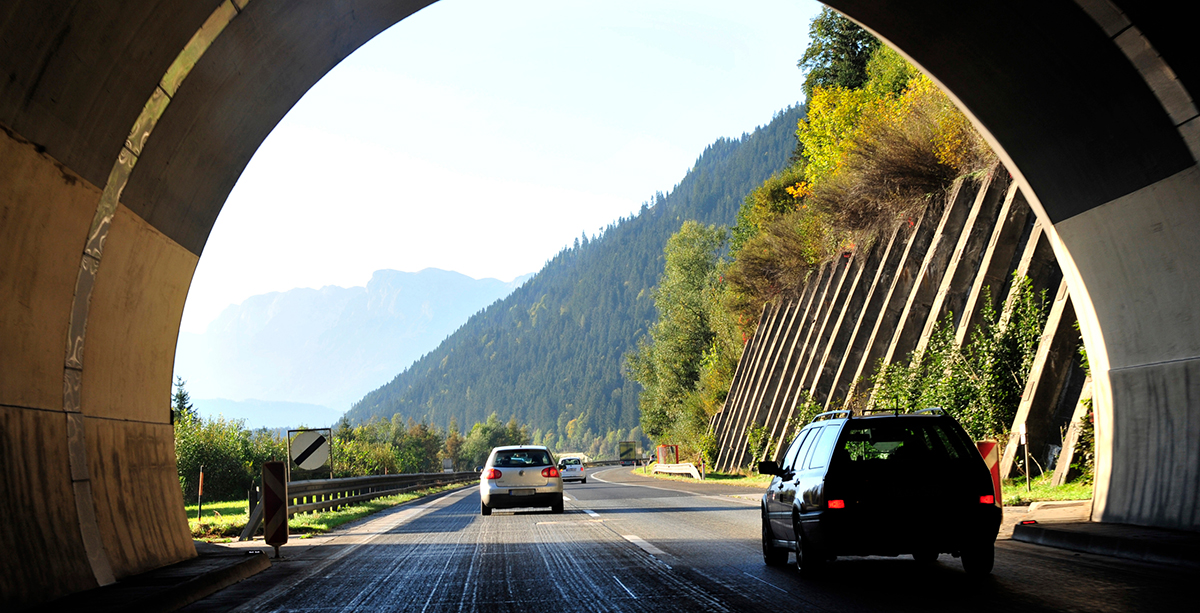
The A 10 Tauern motorway is one of the busiest travel routes in Austria. It is well known that existing capacity is insufficient during the travel weekends from May to September. This results in traffic jams with hours of delays and inconvenience for local residents due to the supposedly time-saving diversion of many drivers onto regional and municipal roads – usually on the recommendation of their satnavs.
The aim of the seven-point ‘Multifunctional Transit Management’ programme of measures presented in Salzburg is to improve traffic flow in transit and tourist traffic on the A 10 motorway in the short and medium term, as well as to avoid or reduce diversionary traffic, thereby relieving the burden on residents in neighbouring communities. It is not possible to prevent congestion altogether due to the temporarily enormous volumes of traffic on this important north-south axis, but more even and fluid traffic will significantly improve travel quality and road safety.
The programme comprises a large number of short- and medium-term construction and traffic management projects, as well as even higher quality traffic information and travel time forecasts. The optimisation of control measures and the adjustment of restrictions and bans are also part of the package, which is being implemented by ASFINAG, the Federal Ministry of Mobility and the Province of Salzburg.
Transport Minister Peter Hanke: "With this package of measures, we are demonstrating that modern infrastructure policy is not just about construction, but above all about intelligent management. We are investing in technology that reduces congestion, relieves the burden on residents and gives travellers predictability. This programme keeps traffic where it belongs – on the motorway – and relieves the burden on local communities. Travellers reach their destinations more safely, and residents get their roads back."
Salzburg Governor Karoline Edtstadler: "With up to 100,000 cars on the Tauern motorway, Salzburg is particularly affected by tourist traffic. That is why it is important and right for ASFINAG to invest around 40 million euros in a modern traffic management system. This will benefit Salzburg residents who travel by car, because traffic will flow more smoothly, and residents, because it will be more difficult to divert traffic onto regional and municipal roads."
Stefan Schnöll, Deputy Governor: "With this package of measures, we are improving traffic management on the Tauern motorway and attempting to regain control of our roads. The A10 is one of Austria's central transport axes. Through intelligent traffic management, targeted control measures and regulated traffic flow, we are able to keep traffic moving as smoothly as possible for as long as possible and keep it on the motorway in the event of congestion. In this way, we want to try to create a noticeable relief for the people in the communities neighbouring the motorway."
Hartwig Hufnagl, Executive Director of ASFINAG: "ASFINAG is an innovative and sustainable mobility partner – our motto for traffic management is clear: smarter instead of wider. The existing capacity of the A 10 Tauern motorway is sufficient, apart from temporary congestion on busy travel days. But it is precisely for these phases, which are extremely challenging for everyone involved, that we are putting an efficient package of measures on the road. Intelligent traffic control, information and monitoring are the key to better mobility, relief and a better quality of life in the communities along one of Austria's most important north-south axes."
Innovation and intelligent traffic control
1. Intelligent traffic control and increased functionality
The existing displays relating to the former Immissionsschutzgesetz-Luft (IG-L) Verordnung (‘Lufthunderter’) will be expanded into a fully functional traffic control system. The aim of the corresponding speed limits is to harmonise traffic, thereby reducing the risk of accidents and congestion. This expansion of traffic control options will be used as needed for both tourist traffic and commuter traffic throughout the year. Early and preventive speed reduction enables higher vehicle throughput from A to B or in the approach to tunnel portals. Traffic jams and the associated block clearance are prevented or delayed. The specifications for this are determined on the basis of an intelligent analysis of extensive existing traffic data (algorithm). The Walserberg to Golling section, as the approach route to the first A10 tunnel, has top priority.
2. Consolidation of infrastructure (actuators and sensors)
ASFINAG is upgrading the existing information displays to the latest state of the art by switching to fully graphic LED display technology. The renewal and consolidation of sensors for traffic data and vehicle classes enables precise data collection for processing and analysis, which in turn can be transmitted accurately to road users via the new display technology. In total, around 50 sensor locations and around 50 information displays will be technically upgraded or newly installed in the affected sections of the motorway.
3. Further development of efficient traffic management
Along the A10 travel corridor, optimisations will be made to traffic management in order to maintain the highest possible level of performance and safety. This will keep traffic on the motorway and reduce diversionary traffic. To this end, inflows to critical sections will be harmonised and start-up problems (lorries, caravans) on uphill sections will be avoided.
Particularly in connection with the general renovation of the Tauern and Katschberg tunnels starting in autumn 2027, it is important to avoid diversionary traffic through targeted measures at suitable points. At the same time, traffic should be evenly distributed and harmonised during the challenging construction phases. In addition to the technical requirements, the legal framework must also be expanded, for which the responsible transport authorities will be involved.
4. Flow control
An analysis of sensible measures for regulating the flow of traffic onto the A10 will be carried out. So-called flow control systems (‘ramp metering’) are being considered. Sensors on the ramps and on the main carriageway will measure traffic density. A traffic light at the motorway entrance will regulate the flow of cars entering the motorway with red and green phases, which will also make it easier to merge and cause less disruption to traffic on the motorway. So-called ‘gatekeeper traffic lights’ in the lower-level network leading to the motorway have a similar effect with longer red phases and make it unattractive to divert there. Finally, barrier systems on the ramps allow the junction to be completely closed. In the event of such a temporary closure, regional traffic must be handled via the subordinate network.
5. Control measures
Extensive control measures throughout the project area will monitor compliance with traffic control measures and ensure their effectiveness in order to guarantee compliance with speed limits in tourist traffic. As a first step, intensive traffic monitoring will be carried out between the Salzburg and Golling junctions in order to ensure the effectiveness of the speed limits activated during the tourist season.
6. Restrictions and bans
Optimised driving bans and restrictions will promote the separation of tourist and freight traffic, enable better utilisation of existing infrastructure capacities and prevent diversionary traffic. To this end, a working group will be set up between the province of Salzburg and ASFINAG, with the first adjustments due to come into force for the 2026 summer travel season. In terms of peak travel times, this will affect the truck driving ban calendar or truck overtaking bans, night-time driving bans, departure bans or restrictions on special transports.
7. Traffic information and forecasts
ASFINAG will use travel time and forecast services to inform drivers on all relevant channels about the real-time traffic situation, time losses and the future traffic situation on the A10, similar to what has already been done in connection with the renovation of the tunnels between Golling and Werfen. This will now also be done across borders in cooperation with Germany and with a special focus on freight and heavy goods vehicles.
Cooperation between stakeholders
The success of the programme of measures depends on the cooperation of all stakeholders. Most of the projects fall within the remit of ASFINAG. However, individual measures are also the responsibility of the province of Salzburg and the Salzburg Provincial Police Directorate, while traffic law issues and framework conditions are the responsibility of the competent authorities in the Federal Ministry for Innovation, Mobility and Infrastructure.
For the programme to be successful, all measures must be coordinated and implemented in motorway operations. Cooperation with neighbouring countries also plays an important role in successful traffic management along the entire Salzburg and Carinthia ‘Tauern Corridor’ (A10 Tauern and A11 Karawanken motorways) and is a key pillar of the programme.